
What IAR Means
IAR : full form in insurance
IAR commonly stands for Industrial All Risks or simply All Risk (IAR). In practice it denotes a type of property insurance that provides cover for physical loss or damage to insured items unless the policy expressly excludes them. The term describes a broad approach to cover rather than a single standard wording, and its precise meaning may vary between insurers and markets.
How ‘IAR’ is used in policy documents
The letters IAR typically appear in the policy title, schedule, or definitions. When present they signal an “all-risk” approach: losses are covered unless an exclusion applies. Because insurers use different abbreviations or local product names, always read the policy definitions and schedule to confirm what your insurer means by IAR.
When IAR is not the right term
Don’t assume “IAR” guarantees every possible loss. If your document is called “named perils” or lists specific perils, that is a different product. If you see IAR but the exclusions are broad, get clarification sometimes an insurer markets a broad product but excludes many high-severity perils.
All-Risk (IAR) Policy: Overview and Scope
What ‘all risk’ generally means
An all-risk insurance policy (IAR) generally means cover is provided for accidental physical loss or damage to insured property, except for what the policy specifically excludes. Plain-language examples include sudden accidental damage from handling, an object falling on machinery, or accidental breakage of a fixed plant. The key point: the insurer covers losses by default unless an exclusion or condition applies.
All-risk versus named-perils policies
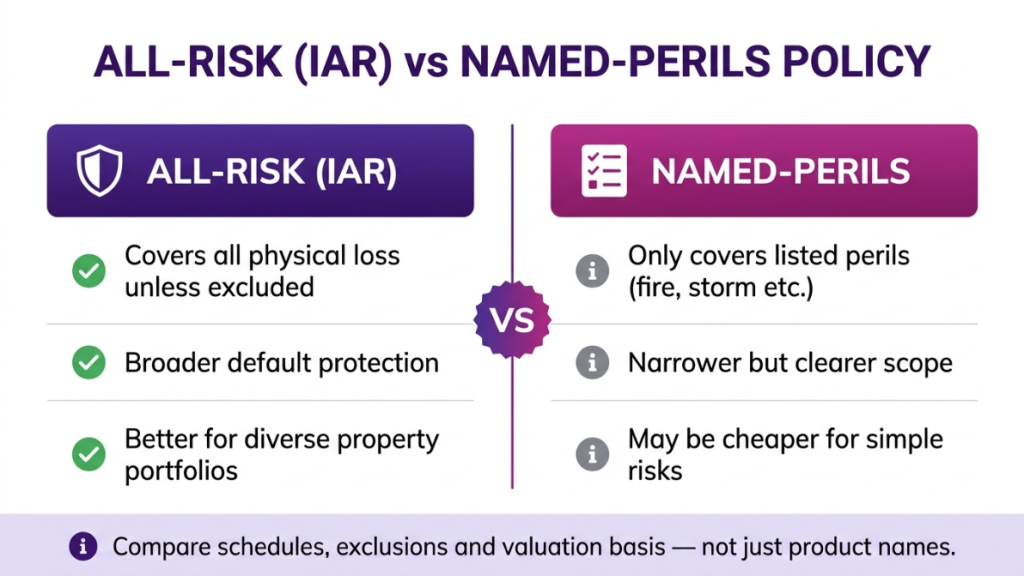
Compare the two approaches:
| All-risk (IAR) | Named-perils |
| Covers physical loss/damage unless excluded | Only covers perils listed (eg, fire, lightning, storm) |
| Broader default protection; read exclusions carefully | Narrower but clearer perils; less ambiguity |
| Better for diverse property portfolios | May be cheaper for simple risks |
When buying, compare the schedule, exclusions and valuation basis rather than just the product name.
Typical property and asset types covered
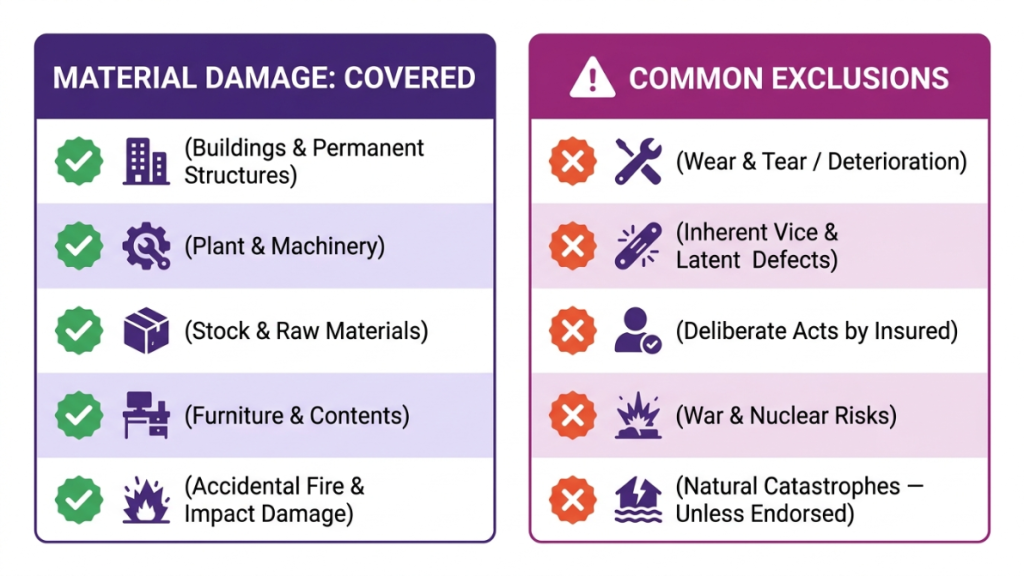
Material damage sections in IAR policies commonly insure:
- Buildings and permanent structures
- Plant, machinery and equipment
- Stock, raw materials and finished goods
- Furniture & fittings and contents
Cover can vary by industry—manufacturers and retailers may need different schedules and sub-limits—so confirm insured item lists on the policy schedule.
Material Damage Section: Cover, Valuation and Exclusions
Standard cover under material damage
The material damage (MD) section typically covers “physical loss or damage” to tangible property caused by an insured event. Common examples included (subject to wording): accidental physical damage, collapse from sudden events, or damage due to fire, explosion or impact when not excluded. Some policies also extend cover to damage occurring during handling on the insured premises.
Common exclusions and limitations
Frequent exclusions you’ll see in MD sections include:
- Wear and tear, gradual deterioration, maintenance defects
- Inherent vice or latent defects (eg, metal fatigue over time)
- Deliberate acts by the insured or wilful misconduct
- War, civil commotion, nuclear risks (often excluded or limited)
- Specific natural catastrophes such as flood or earthquake (often excluded unless endorsed)
Policies may also include sub-limits (eg, spare parts, data restoration) and different excesses for each peril—read sub-limit tables and deductible clauses closely.
Sum insured, basis of settlement and valuations
Understanding valuation is essential to claim settlements:
- Reinstatement / replacement cost: insurer pays to rebuild or replace like for like (usually without deduction for depreciation).
- Indemnity Value: the claim settlement reflects the value at time of loss and is often lower than the replacement cost.
- Agreed value: insurer and insured agree the sum insured in advance—helpful for unique assets.
Many policies include an average clause: if the sum insured is less than actual value, the claim payment may be reduced proportionally. To avoid under-insurance, review sums insured regularly and consider inflation or asset additions.
Extensions, Endorsements and Optional Covers
Common optional covers include:
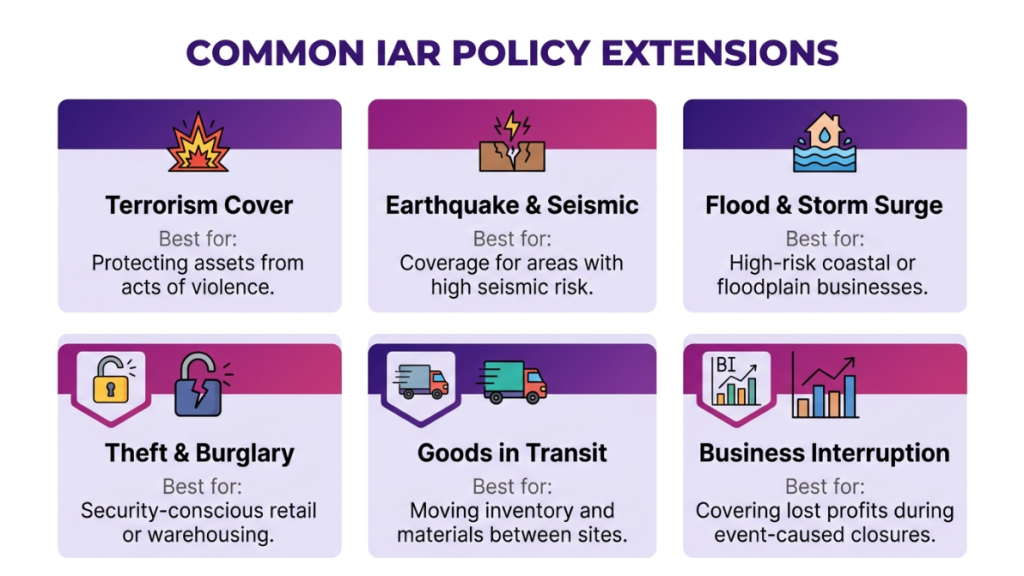
Some perils and exposures are commonly excluded from a base IAR and added back by endorsement or extension. Typical add-ons include:
- Terrorism cover — covers damage from certified acts of terrorism
- Earthquake and seismic — often excluded by default
- Flood/storm surge — added where flood is a material risk
- Theft and burglary extensions — for stock or contents off-premises
- Goods in transit cover — damage or loss during movement between locations
- Business interruption (as a related extension) — covers consequential loss from material damage
When to choose optional covers versus higher limits
Decision factors include asset criticality, frequency versus severity of the peril, regulatory requirements and cost. Example: a small warehouse in a low-seismic zone may cheaply add theft cover, while a manufacturing facility in an earthquake zone should buy earthquake cover or a specialist policy. Consider probability and impact, then balance premium cost versus potential loss.
How endorsements change policy wordings
Endorsements modify the original policy contract adding, deleting or changing cover. They are legally part of the policy and usually state an effective date and wording change. Always file endorsements with the main policy schedule and read any new or amended definitions and conditions they introduce.
IAR Policy Wordings: Sample Clauses and Common Phrases
Typical cover clause language
Cover clauses in IAR policies commonly include trigger phrases such as “physical loss or damage” and qualifiers like “unless otherwise excluded”. A paraphrased example: “This policy insures against all risks of physical loss or damage to the insured property, subject to the terms, conditions and exclusions of this policy and its endorsements.” The schedule lists insured items and sums insured.
Common exclusion clause phrasing
Exclusion headings often read “This policy does not cover” followed by bullet points. Paraphrased examples: “Damage caused by wear and tear; losses arising from intentional acts by the insured; losses consequent upon war, confiscation, or nuclear hazards.” Exclusions may contain carve-outs (exceptions to the exclusion) so read both the heading and the detailed wording.
Key definitions to watch for in wording
Definitions determine how terms behave in the contract. Common defined terms to compare across policies include: “insured peril”, “tangible property”, “reinstatement value”, “business interruption” and “insured events”. Cross-references are frequent if a definition refers to another clause, trace that clause to understand the effect.
Note: sample wordings here are paraphrased for illustration and do not replace your actual policy wording or legal advice.
How to Read Your IAR Policy and Questions to Ask Before Buying
Review the schedule and key policy information
Start with the schedule: it shows the insured, policy period, insured locations, sums insured and any special conditions. Ensure asset lists, values and locations are accurate—the schedule controls what is covered.
Check excesses, sub-limits and warranties
Check how excesses are applied (per event, per item, per location) and whether there are special excesses for certain perils. Sub-limits (eg, for portable items or data restoration) limit claim settlements; warranties (eg, fire alarm or maintenance) can be strict—breach may void cover for a claim related to the warranty.
Key questions to ask your broker or insurer
- Which perils are explicitly excluded and why?
- What basis of settlement applies for each item (reinstatement, market value, agreed value)?
- Are there sub-limits or special deductibles for named perils?
- How are endorsements recorded, and what is the effective date for new covers?
- What is the claims notification process, and what are the expected timescales?
- How often should sums insured be reviewed or indexed?
Obtain written confirmations for material clarifications and keep a copy of all endorsements and schedules with the policy.
Claims, Common Pitfalls and Practical Tips for Material Damage Losses
Filing a material damage claim step by step
After a loss: (1) ensure safety and prevent further damage; (2) notify your insurer immediately, quoting your policy reference number; (3) document the loss with photographs and supporting asset register , (4) obtain repair quotations and keep damaged items where possible for inspection. Check your policy for any specific notification requirements.
Documentation and evidence that matter
Useful documents include the policy reference number and schedule,asset registers, maintenance records , purchase invoices, photographs or videos of the damaged items, repair quotations and police reports where applicable. Retain damaged property until the insurer inspects (unless safety requires disposal).
Common reasons for disputes and how to reduce risk
Common causes of claim disputes: non-disclosure of material facts, under-insurance invoking average, late notification, or losses caused by excluded perils. To reduce disputes: declare material facts accurately, review sums insured regularly, document asset conditions, and obtain written endorsements for agreed changes in cover. For complex or high-value claims, involve your broker or legal adviser early.
Secure Your Business with OmniKavvach!
FAQs
1. What does IAR stand for in insurance?
IAR commonly stands for Industrial All Risks or is used to denote an all-risk approach. It indicates cover for physical loss or damage unless the policy specifically excludes a risk—check your policy definitions to confirm.
2. Does an all-risk (IAR) policy cover every possible loss?
No. “All-risk” means cover is provided unless excluded. Exclusions, sub-limits and conditions can significantly restrict cover—read exclusion clauses and ask your insurer about material perils.
3. What is included in the material damage section of an IAR policy?
The material damage section typically covers physical loss or damage to tangible property such as buildings, plant & machinery, stock and contents, subject to exclusions, sub-limits and basis of valuation set out in the policy.
4. Can I add specific perils (like flood or earthquake) to an IAR policy?
Yes , many insurers provide endorsements or extensions for flood, earthquake, terrorism, goods in transit , and theft. These are added by endorsement and usually increase the premium; confirm precise wording and effective dates.
5. Where can I find sample IAR policy wordings, and who should I ask to interpret them?
Sample policy wordings are often available from insurers, brokers, or industry bodies, but your best resource for interpretation is a qualified broker or legal adviser who can read your specific contract and explain how clauses apply to your exposures.